Prepared by the Research Department at Lawionyrs under the supervision of Muayid Al-Din Al-Sadiq Malli
On February 12, 2026, several customers filed simultaneous complaints against an international online store after purchasing products that were never delivered, despite receiving shipping confirmation notifications.
An initial investigation revealed that the website was a fake front imitating a well-known store, carefully designed to deceive users and steal their financial data.
Within a few days, losses exceeded hundreds of thousands of dollars before the site was shut down and its operators disappeared.
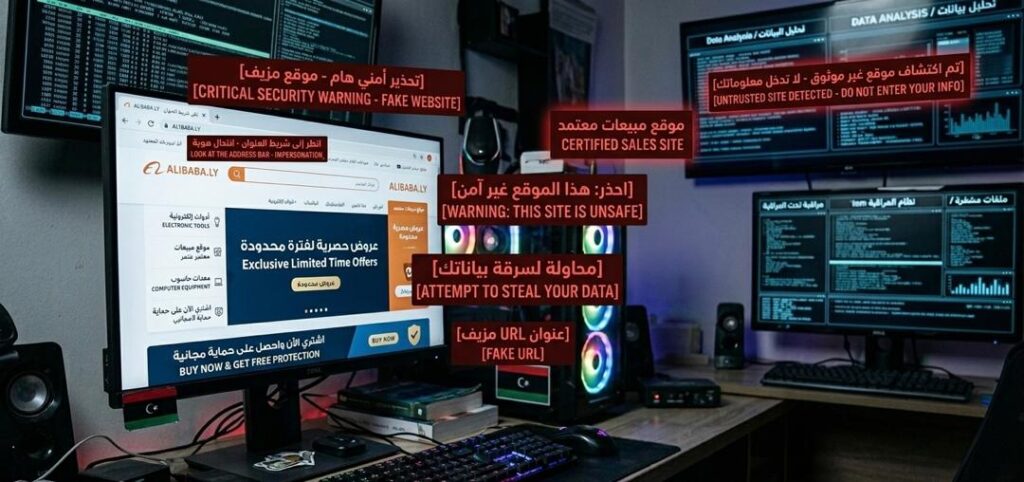
This incident represents a recurring model of e-commerce fraud, which has become one of the most widespread crimes in the digital business environment, especially with the massive growth in online shopping.
The methods of this crime vary, including creating fake stores, manipulating payment processes, stealing credit card data, or even exploiting legitimate platforms through fake accounts.
Reports from the Federal Trade Commission indicate that e-commerce fraud is among the most frequently reported types of financial fraud in recent years, with its rates increasing significantly alongside the rise of digital shopping.

From a legal perspective, this crime raises multiple issues, most notably determining legal liability among various parties, especially in cases where the roles of platforms, payment service providers, and sellers overlap.
It also highlights the difficulty of recovering funds when transferred عبر international financial systems or cryptocurrencies.
In this context, studies by the Organisation for Economic Co-operation and Development show that weak seller identity verification mechanisms and lack of consumer awareness are among the main factors contributing to the spread of this type of crime.

Reports from the World Bank confirm that the growth of the digital economy without parallel development in legal and regulatory frameworks may increase fraud rates, negatively impacting investor and consumer confidence in online markets.
From an Islamic law perspective, this crime falls under fraud, deception, and unlawful consumption of others’ wealth, which are prohibited acts due to their deceptive and harmful nature, reinforcing the need for strict legal controls to combat it.
At the international regulatory level, reports from the International Chamber of Commerce emphasize the importance of establishing unified standards to protect consumers in e-commerce and enhance transparency in digital transactions, reducing opportunities for fraud.
Research from the Massachusetts Institute of Technology shows that the use of AI technologies can significantly help detect fraudulent patterns by analyzing user behavior and financial transactions in real time.

In light of the above, e-commerce fraud is not only a financial threat but also undermines overall trust in the digital business environment, requiring an integrated legal and technological response to ensure the sustainability of this vital sector.
Results:
1. E-commerce fraud is one of the most widespread crimes in the digital economy.
2. Weak seller identity verification contributes to increased fraud rates.
3. Current laws struggle to keep pace with evolving fraud methods.
4. Recovering funds is a major challenge in cross-border crimes.
5. Technology can be an effective tool in detecting and preventing fraud.
Recommendations:
1. Develop specialized e-commerce legislation to protect consumers.
2. Require digital platforms to implement strict seller verification mechanisms.
3. Enhance international cooperation in prosecuting cybercriminals.
4. Utilize AI technologies to monitor fraudulent activities.
5. Raise consumer awareness about fraud methods and prevention strategies.
Open Question:
Can a real balance be achieved between the rapid growth of e-commerce and ensuring adequate legal protection for consumers, or will trust remain vulnerable at every stage of digital evolution?
Sources:
- Federal Trade Commission reports on e-commerce fraud
- Organisation for Economic Co-operation and Development studies on consumer protection
- World Bank reports on the digital economy
- International Chamber of Commerce reports on e-commerce
- Massachusetts Institute of Technology research on AI and financial analysis
For more professional articles on these topics, visit the articles section on our website www.lawionyrs.com, which specializes in training, consulting, research, and publishing within an international legal framework. You can also explore certified courses in the courses section, video content in the video section, books in the books section, and other services. Navigate to the homepage by clicking the home button and choose the section that suits you.