Prepared by the Research Department at Lawionyrs under the supervision of Muayid Al-Din Al-Sadiq Malli
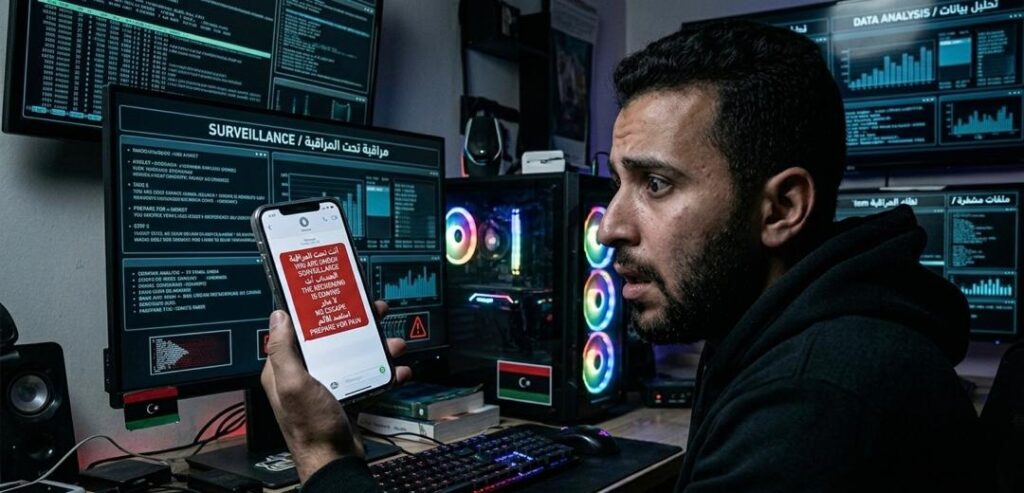
On November 3, 2025, an entrepreneur in the Middle East woke up to an email containing a direct threat: “We have your personal data and private conversations. If you do not transfer a specified amount within 48 hours, everything will be published.”
This message was not just a passing threat; it marked the beginning of one of the most widespread crimes in the digital age—cyber extortion—which now targets both individuals and companies alike.

The danger of this crime stems from its complex nature, combining technical intrusion with psychological pressure, placing the victim in a vulnerable state that often leads to compliance.
Reports from the Federal Bureau of Investigation indicate that cyber extortion crimes have significantly increased in recent years, particularly with the rise of remote work and social media usage.
This crime takes multiple forms, including extortion using personal images, account breaches, and what is known as “ransomware” attacks, where victims’ data is encrypted and a payment is demanded for decryption.

From a legal perspective, cyber extortion raises precise issues regarding the material and moral elements of the crime, especially in cases where threats are made without actual execution.
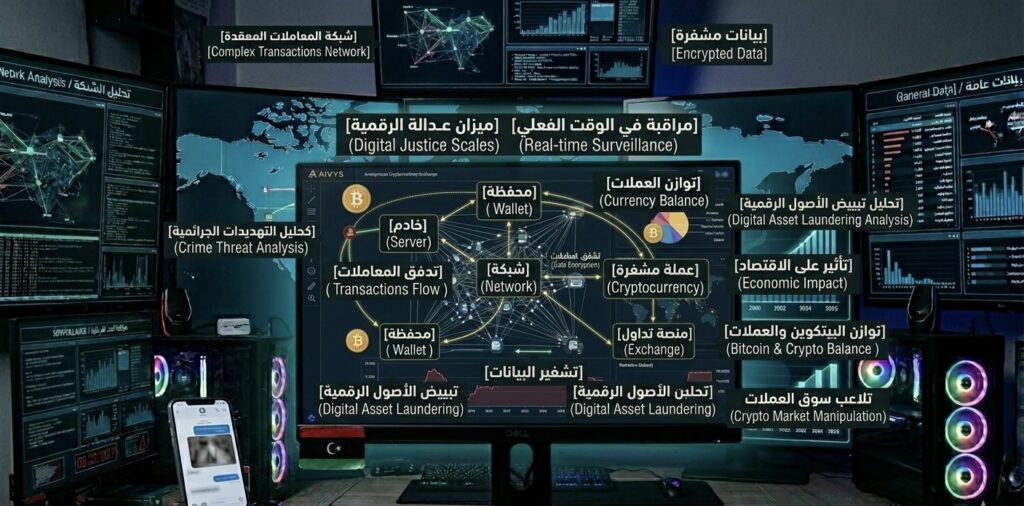
It also highlights the difficulty of proving the crime when anonymity tools such as private networks or cryptocurrencies are used.
In this context, studies by Europol show that organized criminal networks increasingly rely on cyber extortion as a primary source of income due to its high returns and lower risks compared to traditional crimes.

Reports from the World Economic Forum confirm that cyberattacks, including cyber extortion, are among the most significant global risks threatening economic stability, particularly with the increasing reliance on digital systems in business and services.
From an Islamic law perspective, this crime falls under coercion and unlawful consumption of others’ wealth, which are prohibited acts due to their ظلم (injustice) and violation of rights, providing a strong basis for its criminalization.
At the legislative level, many countries have enacted laws to combat cybercrime; however, these laws still face challenges in implementation, particularly regarding international cooperation, information sharing, and extradition.
Research from Harvard Law School indicates that effectively combating cyber extortion depends on the integration of legal and technological efforts, along with raising user awareness, as users are often the weakest link.
In light of the above, cyber extortion is no longer an isolated criminal act but a complex global phenomenon requiring an integrated legal and technological response that considers its nature and rapid evolution.
Results:
1. Cyber extortion is one of the most widespread and dangerous crimes in the digital age.
2. The difficulty of tracking perpetrators complicates enforcement efforts.
3. Current laws need development to keep pace with this type of crime.
4. The psychological factor plays a major role in the success of the crime.
5. International cooperation is a critical factor in reducing this phenomenon.
Recommendations:
1. Update legislation to cover various forms of cyber extortion in greater detail.
2. Strengthen international cooperation in combating cybercrime.
3. Develop technological tools to detect and prevent attacks before they occur.
4. Promote digital awareness among individuals and organizations.
5. Train judicial authorities to handle such crimes effectively.
Open Question: With this growing spread, can a legal system be built that effectively deters cyber extortion, or will the victim always remain the weakest link?
Sources:
Federal Bureau of Investigation reports on cybercrime
Europol reports on organized digital crime
World Economic Forum report on global risks
Harvard Law School research in law and technology
For more professional articles on these topics, visit the articles section on our website www.lawionyrs.com, which specializes in training, consulting, research, and publishing within an international legal framework. You can also explore certified courses in the courses section, video content in the video section, books in the books section, and other services. Navigate to the homepage by clicking the home button and choose the section that suits you.